
What is the best dua for pain? The direct answer is the supplication taught by Prophet Muhammad (peace be upon him) to his companion Uthman ibn Abi al-As: place your hand on the area of pain, recite “Bismillah” three times, then recite “A’udhu bi ‘izzatillahi wa qudratihi min sharri ma ajidu wa uhadhiru” seven times. This is the most authentic and widely recommended answer to the question of dua for pain, recorded in Sahih Muslim (Hadith 2202).
If you have been searching for what is the best dua for pain, this guide covers everything: the exact Arabic text, transliteration, English meaning, the hadith evidence behind it, complementary supplications, and practical tips to make your dua more effective.
What Is the Best Dua for Pain? The Primary Prophetic Supplication
When answering The best dua for pain, scholars consistently point to the hadith of Uthman ibn Abi al-As. He complained to the Prophet about a pain in his body that had been troubling him since he accepted Islam. The Prophet taught him a specific method and wording. Uthman later reported: “I said that, and Allah removed what I had. I still command my family and others to say it.”
This narration is recorded by Imam Muslim in his Sahih, making it the strongest evidence-based answer to what is the best dua for pain available in the prophetic tradition.
The Method for the Best Dua for Pain
- Place your hand directly on the part of the body that hurts.
- Say “Bismillah” three times.
- Recite the supplication seven times.
Arabic Text of the Best Dua for Pain
بِسْمِ اللهِ (three times)
أَعُوذُ بِعِزَّةِ اللهِ وَقُدْرَتِهِ مِنْ شَرِّ مَا أَجِدُ وَأُحَاذِرُ (seven times)
Transliteration
Bismillah (3x)
A’udhu bi ‘izzatillahi wa qudratihi min sharri ma ajidu wa uhadhiru (7x)
English Meaning
“In the Name of Allah. I seek refuge in the might of Allah and His power from the evil of what I feel and what I fear.”
Why This Is the Best Dua for Pain
When asking what is the best dua for pain, the answer lies in this supplication’s unique combination of elements: acknowledgment of Allah’s might and power, seeking refuge from the specific pain being felt, and repetition that mirrors the way medicine is administered in measured doses. Imam Ibn al-Qayyim noted that the repetition seven times is intentional—it makes the supplication “more effective and more penetrating, like repeating a remedy to expel the substance” of illness. This is why scholars consistently recommend it when asked Is the best dua for pain.
What Is the Best Dua for Pain with Fever? The General Healing Supplication
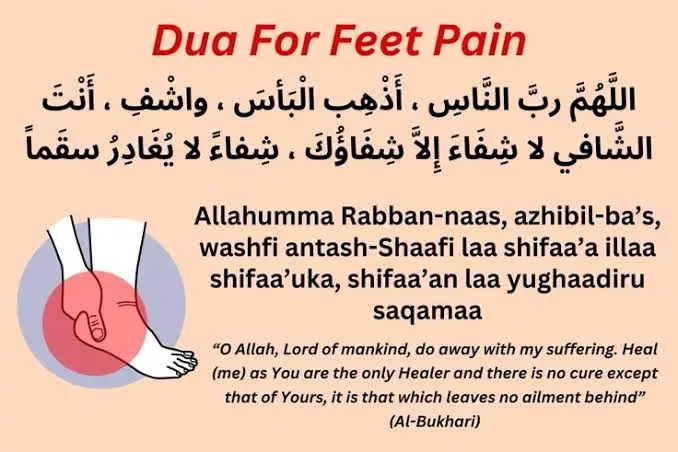
When pain is accompanied by fever or general sickness, the answer to what is the best dua for pain shifts to a broader healing supplication. Aisha reported that when the Prophet visited a sick person, he would wipe them with his right hand and say:
Arabic Text
اللَّهُمَّ رَبَّ النَّاسِ أَذْهِبِ الْبَأْسَ اشْفِ أَنْتَ الشَّافِي لَا شَافِيَ إِلَّا أَنْتَ شِفَاءً لَا يُغَادِرُ سَقَمًا
Transliteration
Allahumma Rabban-nas, adhhibil-ba’s, ishfi Antash-Shafi, la shafi’a illa Anta, shifa’an la yughadiru saqama.
English Meaning
“O Allah, Lord of mankind, remove the affliction. Heal, for You are the Healer. There is no healer except You, with a healing that leaves no trace of illness.”
This dua is particularly valuable when considering because it asks not merely for pain relief but for complete removal of the disease—a healing that leaves nothing behind.
What Is the Best Dua for Pain in Joints and Bones?
For pain concentrated in joints, bones, or a specific limb, scholars from Darul Uloom Deoband recommend a shorter supplication when asked what is the best dua for pain in localized areas:
Arabic Text
أَسْأَلُ اللهَ الْعَظِيمَ رَبَّ الْعَرْشِ الْعَظِيمِ أَنْ يَشْفِيَنِي
Transliteration
As’alullahal-‘Azima Rabbal-‘Arshil-‘Azimi an yashfiyani.
English Meaning
“I ask Allah, the Mighty, Lord of the Mighty Throne, to heal me.”
Recommended Practice
Recite this dua seven times and blow gently on the area of pain. Alongside it, repeat “Ya Salam” (O Peace) as much as possible, as this is one of Allah’s names and carries healing significance. A similar recommendation appears in a Deoband fatwa for full-body pain, where the dua is recited seven times and blown over the entire body. This is a practical answer to what is the best dua for pain when the pain is localized.
What Is the Best Dua for Pain? How to Make It More Effective
Knowing The best dua for pain is only half the answer. The other half is making it effective. Here are key principles:
Combine Dua with Medical Treatment
The prophetic tradition does not separate spiritual healing from physical medicine. The Prophet himself sought treatment when ill and instructed his companions to do the same. The best dua for pain is a complement to medical care, not a replacement. Scholars consistently advise: see a doctor, take prescribed treatment, and turn to Allah simultaneously.
Have Certainty and Patience
Dua is an act of worship and should be made with conviction. The Prophet taught that supplication should be offered with a present heart and certainty that Allah will respond. Alongside this, patience (sabr) and acceptance of Allah’s decree are essential. The repetition in the best dua for pain—three and seven times—helps build this focus and sincerity.
Blow Gently After Reciting
While the primary hadith does not explicitly mention blowing (nafth), scholars and fatwa bodies recommend blowing lightly on the painful area after reciting. This practice is rooted in the broader prophetic tradition of reciting supplications and blowing over the sick.
Use Allah’s Names for Healing
Repeat the names “Ya Shafi” (O Healer) and “Ya Salam” (O Peace). Scholars like Sheikh Ahmad Kutty recommend meditating on these names alongside the prophetic duas, as they invoke Allah’s attributes of healing and peace. This adds depth to your answer to what is the best dua for pain.
What Is the Best Dua for Pain? Additional Authentic Supplications
The Dua Asking Allah to Heal You
A shorter, direct supplication recommended by Darul Uloom Deoband for those asking what is the best dua for pain:
أَسْأَلُ اللهَ العَظِيمَ رَبَّ العَرْشِ العَظِيمِ أَنْ يَشْفِيَنِي
As’alullahal-‘Azima Rabbal-‘Arshil-‘Azimi an yashfiyani.
“I ask Allah, the Mighty, Lord of the Mighty Throne, to heal me.”
The Dua for Complete Healing
اللَّهُمَّ رَبَّ النَّاسِ أَذْهِبِ الْبَأْسَ اشْفِ أَنْتَ الشَّافِي لَا شَافِيَ إِلَّا أَنْتَ
This is the same dua used for fever and general illness, and it is among the most comprehensive healing supplications in the Sunnah. When people ask what is the best dua for pain, this is often cited alongside the primary supplication.
The Dua for Anxiety and Distress Combined with Pain
For pain accompanied by worry or grief, the Prophet taught a longer supplication that includes asking Allah to make the Quran the “spring of the heart” and the “removal of sorrow.” While not specific to physical pain, it addresses the emotional dimension that often accompanies chronic illness. This is an important consideration when answering what is the best dua for pain for someone suffering emotionally as well.
What Is the Best Dua for Pain? Frequently Asked Questions
Q: What is the best dua for pain that is severe or chronic?
A: The primary dua (A’udhu bi ‘izzatillahi…) is the most specific and authentic for pain. For chronic conditions, combine it with the dua “Allahumma Rabban-nas…” and the shorter “As’alullahal-‘Azim…”. Consistency and certainty matter more than any single recitation.
Q: The best dua for pain when making it for someone else?
A: Yes, you can make the same duas for others. The Prophet made dua for others using the same formulas. When supplicating for another person, use the general healing dua “Allahumma Rabban-nas…” or adapt the wording to ask Allah to heal them by name. This is a common follow-up to what is the best dua for pain.
Q: What is the best dua for pain if I don’t know Arabic?
A: You can recite the transliteration while learning the Arabic. The meaning and intention matter, and Allah understands all languages. However, learning the original Arabic preserves the exact prophetic wording and is encouraged. This does not change what is the best dua for pain—the wording remains the same.
Q: Dua for pain, and should I stop taking medication if it brings relief?
A: No. The Prophet sought medical treatment and instructed his companions to do so. The best dua for pain and medicine work together. Abandoning treatment is not part of prophetic guidance and can be harmful.
Q: The best dua for pain, and how many times should I repeat it?
A: The primary dua specifies three Bismillahs and seven recitations of the full supplication. For other duas, there is no fixed number, but repeating them consistently—especially after obligatory prayers or during times of acute pain—is recommended. This repetition is part of what makes it the best dua for pain.
What Is the Best Dua for Pain? Final Summary
What is the best dua for pain? The answer is the one taught directly by the Prophet to Uthman ibn Abi al-As: place your hand on the pain, say “Bismillah” three times, and recite “A’udhu bi ‘izzatillahi wa qudratihi min sharri ma ajidu wa uhadhiru” seven times. This is the most specific, most authentic, and most directly tested supplication for physical pain in the Islamic tradition.
When asking what is dua for pain, remember to combine it with the broader healing duas, with medical treatment, and with certainty and patience. Place your trust in Allah, who alone grants complete healing. This comprehensive answer to The best dua for pain covers the prophetic method, the supporting evidence, and the practical steps every Muslim can follow.